
Should I Move or Remodel? How Charlotte Homeowners Are Answering That Question in 2026
Posted by Azaliya on June 4, 2026
A few years ago, the math pointed one direction for a lot of people. Charlotte was exploding, inventory was tight, and homes appreciated so fast that trading up felt like a straightforward win. But 2026 looks different. Mortgage rates are still well above where most existing homeowners are locked in. Inventory has improved but desirable neighborhoods remain competitive. And the cumulative cost of selling, buying, and landing in something truly better has crept up significantly.
More and more Charlotte homeowners are doing the honest math — and choosing to stay put and build the home they actually want.
Here's how to think through that decision the right way.

First, Understand What Moving Actually Costs in Charlotte
Most people underestimate the true cost of selling and buying in Charlotte because they think in terms of listing price, not total transaction cost.
In North Carolina, seller closing costs average around 2.75% of the sale price, on top of real estate commissions that run approximately 5.53% in the Charlotte market. On a $430,000 home — close to Charlotte's current median — that's roughly $35,000 walking out the door before you've packed a single box. Add moving costs, overlap carrying costs if your timing doesn't align perfectly, and any updates needed to get your current home market-ready, and you're often looking at $40,000–$55,000 in friction costs just to exit.
Then comes the buy side. If you're trading a mortgage you locked in at 3% or lower for today's rates — still sitting above 6.5% for most buyers — your monthly payment on a comparable home can jump dramatically even if the purchase price is only modestly higher. A $500,000 home at 7% costs roughly $900 more per month than the same home at 3%. That's over $10,000 per year, compounding for as long as you hold the new mortgage.
When Charlotte homeowners add all of this up honestly, the true cost of "just moving somewhere bigger" routinely lands between $150,000 and $250,000 over the first five years — well above what a thoughtfully designed home addition or remodel typically costs.
What the Charlotte Market Is Actually Doing Right Now
Charlotte's housing market in 2026 has moved into what analysts are calling a "balanced" phase. The median sale price sits around $429,000, up about 2.1% year over year — healthy appreciation, but no longer the frenzied pace of 2021 and 2022. Homes are spending an average of 55 days on the market, up from 45 days last year, and inventory has climbed significantly, with active listings up more than 25% compared to this time last year.
What that means for the move-or-remodel decision: there are more homes to look at than there were two years ago, but competition in the specific neighborhoods most Charlotte families are targeting — Myers Park, Dilworth, Cotswold, Ballantyne, Weddington, Waxhaw, Marvin — remains real. Well-priced homes in good school zones still move. The "perfect house in the right neighborhood" isn't suddenly sitting on the market waiting for you.
And here's the thing that often gets lost in the conversation: even in a balanced market, you can't buy back the neighborhood you're already in. If you've spent years building roots — finding the right school, knowing your neighbors, having the grocery store and coffee shop dialed in — that has real value that doesn't show up on a spreadsheet.
When Remodeling Wins
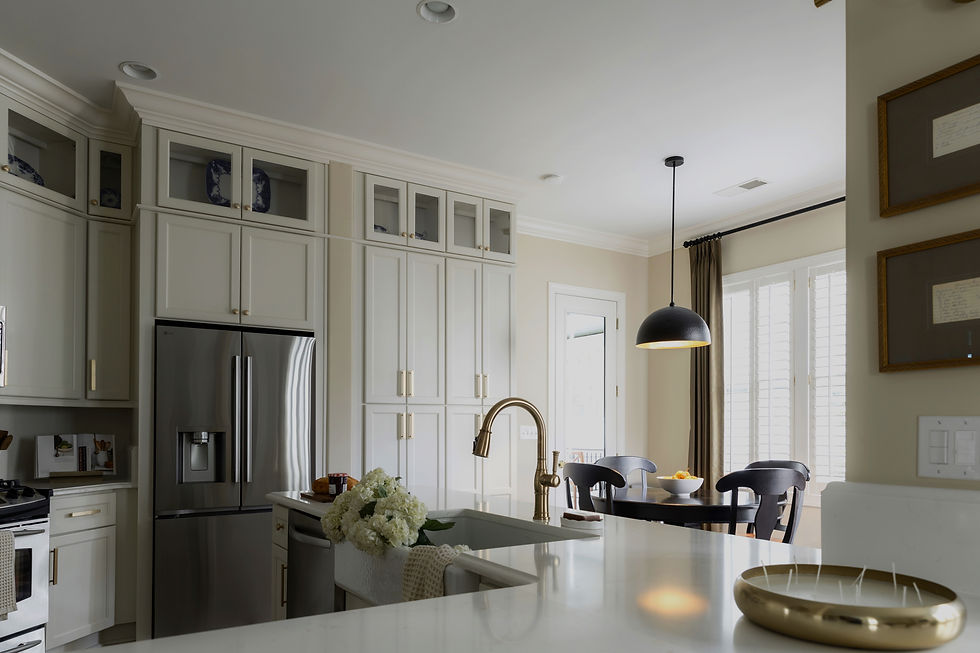
Remodeling makes strong financial and practical sense in a number of situations that are very common for Charlotte homeowners.
You love your location but your home no longer fits your life. This is the most common scenario we hear. The neighborhood is right, the schools are right, the commute is right — but the house was built for a different version of your family. A growing household, aging parents who need to move in, a serious work-from-home setup, or just the accumulation of years in the same space. The house hasn't kept up with you.
Your home has good bones but a frustrating layout. Older Charlotte neighborhoods — Sardis Forest, Sharon Woods, Eastover, the ranch-era homes of South Charlotte — were designed around 1970s and 1980s living patterns. Kitchens are walled off from living rooms. Natural light is blocked by compartmentalized rooms. Primary suites are an afterthought. These aren't unfixable problems. They're renovation opportunities.
You'd be trading a low mortgage rate for something only marginally better. If your current home carries a sub-4% rate and you'd need a 7% mortgage to move, you need to be moving into something meaningfully better to justify the financial hit. For a lot of Charlotte homeowners doing this math, the honest answer is that the homes available in their target range don't clear that bar.
The features you want simply don't exist in your price range in the neighborhoods you'd consider. A dedicated primary suite addition, an open-concept kitchen, a four-season sunroom, an in-law suite — these are transformational features. Adding them to a home you already love, in a neighborhood you already chose, often delivers more value per dollar than trying to find all of those boxes checked in a new purchase.
When Moving Might Win
To be fair about this, there are situations where moving genuinely makes more sense than remodeling.
Your lot truly can't support what you need. Not every Charlotte property has room to expand. If you're in a tight urban infill neighborhood, at the edge of your setback lines, or on a lot where topography or easements make an addition impractical, that limits your options. A proper feasibility review — which Aspire provides before any commitment — will tell you exactly what your lot allows under current Mecklenburg County zoning.
The neighborhood itself no longer fits. Schools change. Commute patterns change. Life circumstances change. If your neighborhood is no longer the right one, no renovation changes that.
The home's structural condition makes renovation unpredictable. There's a meaningful difference between a home with dated finishes and a home with serious foundation, framing, or moisture issues. If a full structural assessment reveals problems that would consume most of your renovation budget before you get to the improvements you actually want, the calculus shifts.
You want something specific that can only be built new. Some buyers have very specific architectural visions that their existing home's structure simply can't accommodate. That's a legitimate reason to move.
The honest answer — and the one you deserve before you make this decision — is that you need real numbers from both directions before you can choose wisely.
The Neighborhoods Where Remodeling Is Paying Off in Charlotte
Not every Charlotte neighborhood makes the same case for staying, but several consistently come up in conversations with homeowners who've run the numbers.
Myers Park and Eastover. Mature tree canopy, walkability, proximity to Uptown — these are irreplaceable. Homes here carry a premium precisely because you can't recreate the neighborhood. Families who bought in Myers Park years ago and are considering moving often discover they'd have to spend significantly more to stay in the same area. Remodeling is frequently the better play.
Dilworth and Elizabeth. The historic craftsman and bungalow stock in these neighborhoods has character that new construction simply doesn't replicate. Many of these homes have floor plans that respond beautifully to thoughtful renovation — opening walls, extending toward the backyard, converting detached garages. The per-square-foot cost of adding space is typically lower than the per-square-foot cost of buying comparable finished space in the same ZIP code.
South Charlotte (Ballantyne, Blakeney, Rea Farms area). Larger lots, good school zones, and newer construction stock that was designed well but may need an update to match how families actually live today — extended primary suites, home offices that feel permanent, outdoor living connections. These homes respond well to additions.
Waxhaw, Weddington, and Marvin. Homeowners who moved into these areas for the schools and the suburban feel often find themselves committed to the location but outgrowing the square footage. An addition here — whether a sunroom, an in-law suite, or a primary suite expansion — can meaningfully change how a family uses the home without giving up the neighborhood they specifically chose.
A Simple Framework for Making the Decision
Rather than agonizing over the question in the abstract, here's a practical way to approach it.
Step 1: Calculate your true cost of moving. Add your expected agent commissions (roughly 5.53% of your sale price in Charlotte), seller closing costs (roughly 2.75%), moving expenses, and any pre-sale updates or repairs. Then calculate the monthly payment difference between your current mortgage and what you'd carry on a new purchase at current rates. That's your real baseline.
Step 2: Get a realistic renovation number. Not a rough estimate — a proper site visit and scope from a contractor who knows Mecklenburg County's permitting process and current material and labor costs. The number might be more or less than you expect, but you can't make a real comparison without it.
Step 3: Compare the five-year picture, not just the upfront number. A renovation that costs $150,000 today but keeps your 3.5% mortgage in place and eliminates $20,000/year in carrying cost difference will often look far better at year five than a home purchase that felt only marginally cheaper upfront.
Step 4: Be honest about what you're actually buying. When you move, you're not just buying square footage — you're buying a specific location, school zone, and neighborhood. If those are already right where you are, that has real value.
What the Design-Build Model Has to Do With It
One reason some homeowners are reluctant to remodel is past experience — or stories they've heard — of renovations that went over budget, took twice as long as promised, or created friction between a designer and a contractor who weren't on the same page.
The design-build model exists specifically to address that. When one firm manages both the design and the construction under a single contract, accountability is clear, communication is direct, and the project doesn't fall through the cracks between two separate professionals who only see their half of the picture.
At Aspire Building Company, we start every project with a feasibility review before you commit to a design direction. We check your lot's setbacks with Mecklenburg County zoning, assess the structural starting point of your home, give you an honest cost range, and let you decide from a position of real information — not a sales pitch.
If the numbers say remodel, we'll show you exactly what your home can become. If the numbers genuinely point toward moving, we'll tell you that too.
Ready to Run the Numbers on Your Charlotte Home?
The move-or-remodel decision is one of the most significant financial choices a Charlotte homeowner will make. It deserves a real conversation with someone who understands both the market and the construction side.
We'd love to walk your home, talk through your goals, and give you an honest picture of what's possible. There's no commitment and no pressure — just real information so you can make the right call for your family.
Aspire Building Company | Charlotte, NC | Design + Build | Home Additions | Kitchen & Bathroom Renovation | Sunrooms


Comments